Introduction: Dehradun’s Streets Are a Foodie’s Paradise
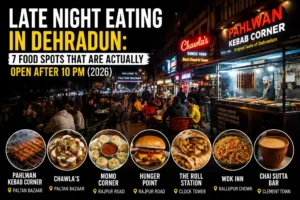
If you’ve ever walked through Paltan Bazaar on a chilly evening, the smell of sizzling momos and hot jalebis pulling you in from every direction — you already know what Dehradun does to your hunger.
Dehradun isn’t just famous for its schools, ISRO, or the gateway to Mussoorie. It’s quietly become one of Uttarakhand’s most exciting street food destinations. The city has a unique mix of Garhwali home cooking, Tibetan flavors, North Indian chaat culture, and a growing café scene — all colliding on its busy pavements.
Whether you’re a tourist passing through or a local rediscovering your own city, this guide covers every must-try dish, every hidden lane, and every practical tip you need to eat well in Dehradun in 2026.
Planning your full Dehradun trip alongside the food? Check out the complete Dehradun Travel Guide 2026 on ChaloPahaad Dehradun for attractions, itinerary, budget tips, and more.
Why Dehradun’s Street Food Scene Is Unique
Most hill towns in Uttarakhand play it safe with standard pahadi food. Dehradun is different.
It sits at a crossroads — geographically and culturally. The large student population (from Doon School, UPES, and dozens of colleges) keeps the street food scene young, experimental, and affordable. Add to that a significant Tibetan community in areas like Clement Town, and you get a city where momos are as local as aloo puri.
The weather helps too. Cool winters and pleasant evenings make eating outside genuinely enjoyable for most of the year.
Top Street Foods You Must Try in Dehradun
1. Momos — The Undisputed King of Dehradun Street Food
Ask anyone in Dehradun what they’re eating tonight, and there’s a solid chance the answer is momos.
Thanks to the Tibetan community settled here since the 1960s, Dehradun has some of the most authentic momos outside of Dharamsala and Darjeeling. You’ll find everything from basic steamed veg momos to pan-fried, tandoori, and even chocolate momos (yes, really).
The same Tibetan culture that brought momos to Dehradun also gave the city its incredible monasteries. If you’re visiting the Clement Town area for food, don’t miss the experience of exploring the monasteries nearby — ChaloPahaad has a brilliant guide on Monasteries in Dehradun that covers Mindrolling, Buddha Temple, and the surrounding Tibetan market.
Best spots for momos in Dehradun:
- Kunga Restaurant, Rajpur Road — One of the oldest and most respected Tibetan restaurants in the city. Their steamed chicken momos with house chilli sauce are legendary.
- Momo stalls near Clock Tower — For fast, cheap, and surprisingly good momos starting at ₹30 a plate.
- Clement Town market — This is the Tibetan settlement area. The momos here taste closest to homemade, and the prices are very wallet-friendly.
Pro tip: Always ask for the red chutney on the side. In Dehradun, the chutney is often as good as the momos themselves.
2. Chaat — Spicy, Tangy, and Absolutely Addictive
Dehradun’s chaat scene is seriously underrated. The city’s chaat has a distinct flavour — a little less sweet than Delhi, a little more tangy, and loaded with fresh coriander and green chilli.
Best chaat items to try:
- Aloo Tikki Chaat — Crispy potato patties topped with curd, tamarind chutney, green chutney, sev, and masala. Pure magic.
- Golgappe (Pani Puri) — The Dehradun version often comes with a spiced mint-water that has a sharper kick than what you’d find in the plains.
- Papdi Chaat — Great as an evening snack, especially during monsoon when you want something filling but light.
- Dahi Bhalla — Soft lentil dumplings drowned in chilled curd and chutneys. A must-try in summer.
Where to find the best chaat in Dehradun:
- Paltan Bazaar — The main hub. Walk from one end to the other and you’ll find at least 10 chaat vendors.
- Bindal’s Chaat Bhandar — A Dehradun institution. Locals have been coming here for decades. Get there before 7 PM or expect a queue.
- Rajpur Road stalls — Slightly pricier but cleaner setups, popular with college students and families.
3. Bal Mithai and Local Sweets — A Garhwali Tradition
This one is often missed by tourists but loved by every local. Bal Mithai is a dark brown fudge-like sweet made from roasted khoya and coated with tiny white sugar balls. It originates from Almora but is widely available in Dehradun.
It’s not exactly street food in the traditional sense, but you’ll find it at roadside sweet shops across the city — often sold by weight, wrapped in newspaper.
Other local sweets worth trying:
- Singodi — Khoya wrapped in maalu leaf, giving it a faint earthy flavour. Unusual and delicious.
- Arsa — A deep-fried sweet rice cake, especially common during festivals.
- Jhangora Kheer — A creamy pudding made from barnyard millet. Very local, very Garhwali.
4. Aloo Ke Gutke — The Pahadi Comfort Food
This is a dish every Dehradun local grows up eating, but most food guides completely ignore it.
Aloo Ke Gutke is a dry preparation of boiled potatoes stir-fried with mustard seeds, dried red chillies, coriander, and a generous hit of jakhiya — a local tempering spice unique to Uttarakhand. It’s crispy on the outside, soft inside, and packed with flavour.
You’ll often find it served with mandua (finger millet) flatbread at local dhabas rather than on street corners — but that’s exactly why it’s a hidden gem.
Where to try it: Look for small dhabas near Haridwar Bypass Road or on the outskirts towards Rishikesh. Avoid the touristy restaurants — this dish tastes best at no-frills places where the cook’s been making it the same way for 30 years.
5. Kachori and Jalebi — The Classic Breakfast Combo
In Dehradun, Sunday mornings (and honestly, most mornings) mean one thing: kachori and jalebi.
Hot, crispy, deep-fried kachoris stuffed with spiced lentils, paired with bright orange, syrup-soaked jalebis fresh off the kadai. This is the Doon breakfast that no fancy café brunch can compete with.
Best places for kachori-jalebi:
- Jain’s Kachori Wala, Paltan Bazaar — Has a loyal following. Sells out by 10 AM on weekends.
- Near Ghanta Ghar (Clock Tower) — Multiple vendors, all competing for your attention at 8 in the morning.
Tip: Go early. By 10–11 AM, the best kachoris are gone.
6. Maggi and Noodles — The Student Favourite
It may sound basic, but Maggi culture in Dehradun is next-level. Dozens of small stalls and roadside counters have elevated this two-minute noodle into a proper street food experience.
You’ll find Maggi made with butter and vegetables, loaded with cheese, or tossed with spicy local masalas. Some stalls even do fusion versions with momos on the side.
Where: Near UPES campus, Rajpur Road late evening stalls, and around Rispana Bridge area.
7. Roasted Corn and Seasonal Street Snacks
Dehradun’s proximity to hills and farms means the seasonal produce game is strong.
In the monsoon season (July–September), bhutta (roasted corn) stalls pop up everywhere — especially near Survey Chowk and along FRI Road. The corn is slathered with lemon juice, butter, and rock salt, then charcoal-roasted to perfection.
In winter (November–February), look out for:
- Gajak and Rewari — Sesame and jaggery sweets, sold by roaming vendors
- Peanut chikkis — Cheap, warm, and perfect for cold evenings
- Shakarkandi chaat — Boiled sweet potato with lemon and spices
Hidden Food Gems in Dehradun Most Tourists Miss
Clement Town Tibetan Market
Most tourists stick to Paltan Bazaar and Rajpur Road. But the real hidden gem is the Tibetan market in Clement Town, about 7–8 km from the city centre.
Here you’ll find authentic Tibetan thukpa (noodle soup), butter tea (po cha), and momos that cost half of what you’d pay in tourist areas. It’s a full cultural experience — not just a meal.
After eating, spending time at the Mindrolling Monastery nearby is a must. ChaloPahaad’s detailed monasteries guide walks you through the best way to experience this entire part of Dehradun.
Haridwar Bypass Dhaba Strip
This stretch is popular with truck drivers and locals but almost invisible to tourists. The dal, roti, and sabzi here costs ₹50–80 for a full plate and tastes like it was made by someone’s grandmother.
FRI Road Evening Vendors
The road leading to the Forest Research Institute gets a cluster of evening food vendors after 5 PM. It’s a relaxed, green setting — you can eat your chaat while watching the Sal trees in the fading light. Genuinely lovely.
If you haven’t visited FRI itself yet, it’s one of Dehradun’s most underrated attractions. The ChaloPahaad guide on Best Places to Visit in Dehradun covers FRI, Robber’s Cave, Sahastradhara, and several other spots you can combine with your food trail.
Best Areas for Street Food in Dehradun — Quick Reference
Paltan Bazaar — The heart of Dehradun’s street food scene. Best for chaat, kachori, jalebi, and general snacking.
Rajpur Road — Slightly upmarket but great variety. Good for momos, Maggi stalls, and evening snacking.
Clock Tower (Ghanta Ghar) area — Dense with vendors. Good for quick bites throughout the day.
Clement Town — Best for authentic Tibetan food. Worth the extra travel.
ISBT area — Excellent for North Indian snacks and cheap full meals at dhabas.
Street Food + Sightseeing: How to Combine Both in One Day
The smartest way to explore Dehradun is to combine your food stops with nearby attractions. Here’s how a well-planned food + sightseeing day looks:
Morning: Kachori-jalebi at Clock Tower, then walk to Paltan Bazaar for chai and local sweets. From here, head to Robber’s Cave (just 8 km away) for a morning visit before the crowds arrive.
Afternoon: Drive to Clement Town for Tibetan momos and thukpa. Explore the Tibetan monastery complex nearby for an hour after lunch.
Evening: Return to Rajpur Road or Paltan Bazaar for chaat and golgappe. Finish with roasted corn near Survey Chowk.
For a properly structured day-by-day plan, ChaloPahaad’s 1-Day Dehradun Itinerary (https://chalopahaad.com/dehradun/) is one of the most detailed hour-by-hour guides available — it even maps out which food stops to hit between attractions.
Getting to These Food Spots: Transport Tips
Dehradun is very easy to navigate if you know the local options.
Shared Vikram autos are the cheapest and most efficient way to get around — fares range from ₹10–30 per ride and they cover all major routes including Paltan Bazaar, Rajpur Road, and Clock Tower. For Clement Town, an auto-rickshaw or cab is more practical.
Coming from Delhi? The Shatabdi Express is the most comfortable and affordable option. If you’re road-tripping, the Dehradun to Mussoorie route is stunning — ChaloPahaad’s Dehradun to Mussoorie Travel Guide 2026 lists the best food stops and cafes along that route too.
Best Time to Eat Street Food in Dehradun
Evening (5 PM – 9 PM) is prime time. Most stalls hit their stride, everything is fresh, and the cool Dehradun air makes eating outside genuinely pleasant.
Mornings (7 AM – 10 AM) are best for breakfast staples like kachori-jalebi and poha.
Monsoon (July–September) is magical for street food — the roasted corn season, steaming momos in the rain, and hot chai from roadside stalls. Just stick to cooked, hot food and avoid cut fruits during this season.
Winter (October–February) is the best overall season for food tourism in Dehradun. Comfortable temperatures, festival sweets, and cozy dhaba culture at its peak.
Practical Tips for Eating Street Food in Dehradun
Stick to busy stalls. High turnover means fresher food. If a vendor has a long queue, that’s a good sign, not a bad one.
Carry cash. Most street food vendors don’t accept UPI yet (though this is slowly changing). Keep ₹200–300 in small change.
Eat where locals eat. If you see families and office workers eating at a stall, it’s almost always safe and good. Tourist-facing spots near hotels often charge double.
Budget: A satisfying street food crawl in Dehradun will cost you between ₹100–250 per person. It’s one of India’s most affordable food cities.
Hygiene check: Look for vendors who store food covered, use fresh oil, and have a clean prep area. Avoid pre-cut fruits and juices from unknown stalls.
How to Plan a Street Food Walk in Dehradun
Here’s a simple half-day street food itinerary:
Morning: Start at Clock Tower for kachori and jalebi (₹30–50). Walk to Paltan Bazaar for chai and local sweets.
Afternoon: Head to Clement Town for Tibetan momos and thukpa. Budget ₹80–120.
Evening: Return to Paltan Bazaar or Rajpur Road for chaat, golgappe, and aloo tikki. Finish with roasted corn near Survey Chowk.
Total budget: ₹300–400 per person.
External Links Worth Bookmarking
These trusted sources will help you plan the food and travel side of your Dehradun trip together:
- Zomato Dehradun — https://www.zomato.com/dehradun — For restaurant reviews, ratings, and finding specific dishes near you in real time.
- Google Maps Dehradun Street Food — https://maps.google.com — The fastest way to locate the nearest momo stall or chaat vendor wherever you are in the city.
- Uttarakhand Tourism Official Website — https://uttarakhandtourism.gov.in — For official travel advisories, seasonal alerts, and event calendars that can affect your food trail plans.
- Tripadvisor Dehradun Restaurants — https://www.tripadvisor.in/Restaurants-g503693-Dehradun_Uttarakhand.html — Useful for reading verified traveller reviews on specific eateries before you visit.
- India Food Network on YouTube — https://www.youtube.com/@IndiafoodNetwork — Has several videos on Dehradun street food that give you a visual feel of stalls before you go.
FAQ: Best Street Food in Dehradun
Q1. What is the most famous street food in Dehradun? Momos are arguably the most famous street food in Dehradun, closely followed by chaat, kachori-jalebi, and aloo ke gutke. The city’s large Tibetan population has made momos a true local staple.
Q2. Where is the best place for street food in Dehradun? Paltan Bazaar is the top destination for street food variety. For momos specifically, Clement Town’s Tibetan market and Rajpur Road stalls are the best options.
Q3. Is street food in Dehradun safe to eat? Yes, generally safe if you follow basic rules — eat at busy stalls, opt for freshly cooked hot food, and avoid pre-cut fruits from unknown vendors. The city has a strong local food culture and most vendors maintain reasonable hygiene standards.
Q4. What is the budget for street food in Dehradun? You can have a very satisfying street food experience for ₹150–300 per person. Even at the higher end, Dehradun’s street food is among the most affordable in North India.
Q5. What time do street food stalls open in Dehradun? Most stalls open by 7–8 AM for breakfast items and stay busy till 9–10 PM. The peak hours are early morning (7–10 AM) for breakfast and evenings (5–9 PM) for snacks and chaat.
Q6. What is a unique local food in Dehradun that tourists often miss? Aloo Ke Gutke cooked with jakhiya spice is the most uniquely Garhwali dish that most tourists miss. Bal Mithai, Singodi, and Jhangora Kheer are other local specialties rarely found outside Uttarakhand.
Q7. Which season is best for street food in Dehradun? Winter (October to February) is the best overall season. The pleasant weather makes eating outside comfortable, and seasonal treats like gajak, chikkis, and festival sweets are widely available. Monsoon is great for momos and roasted corn but stick to hot, freshly cooked food.
Ready to explore Dehradun’s streets? Lace up your walking shoes, keep some cash in your pocket, and follow your nose. The best meal you’ll have here won’t be in a restaurant — it’ll be standing at a chaat stall at dusk, watching the city go by.your walking shoes, keep some cash in your pocket, and follow your nose. The best meal you’ll have here won’t be in a restaurant — it’ll be standing at a chaat stall at dusk, watching the city go by.