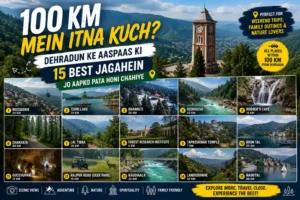
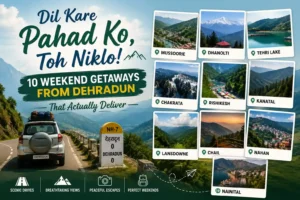
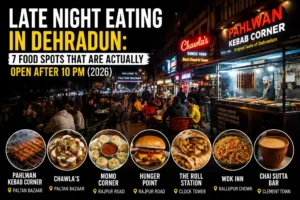
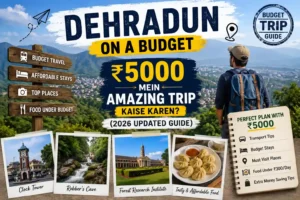
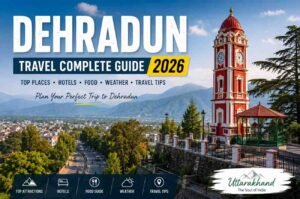
If you’ve been looking for a destination that balances mountain freshness, colonial character, rich Pahadi culture, and effortless accessibility — your search ends here. The Dehradun Travel Complete Guide 2026 is built for travellers who want more than generic itineraries — whether you’re a first-timer stepping off the Shatabdi Express, a solo explorer hunting for quiet trails, or a family planning a summer escape from the plains.
Dehradun, the capital of Uttarakhand, sits at 640 metres above sea level in the lush Doon Valley, flanked by the Shivalik Hills to the south and the Mussoorie ridge to the north. Its position as the gateway to the Garhwal Himalayas means that within a 90-minute drive, you can be standing at 2,000 metres watching Himalayan peaks glow at sunrise — yet still return to a city of great coffee shops, bookstores, and Basmati-scented dhabas in time for dinner.
In 2026, Dehradun has matured into a destination in its own right — not just a transit point for Mussoorie or Rishikesh. New boutique stays have opened in the old colonial quarters, the Rajpur Road cafe culture has blossomed, and infrastructure improvements have made the city genuinely easier to navigate. This guide covers everything — from the best places to visit in Dehradun to its mausam patterns, the finest sunset viewpoints, solo-travel safety, local food, and practical day-wise itineraries.
Quick Facts & City Overview
Before you pack your bags, here’s a snapshot of the city that shapes every travel decision — from what to wear to which route to take.
- Altitude: 640 metres above sea level — comfortable for all ages, no altitude sickness risk.
- State: Uttarakhand — Dehradun has been the state capital since 2000.
- Nearest Airport: Jolly Grant (DED), approximately 25 km from city centre.
- Delhi by Train: 5–6 hours on the Shatabdi Express — a comfortable and scenic journey.
- Peak Season: March to June, and September to November (post-monsoon).
- Average Temperature: 22°C. Ranges from 5°C in January to 36°C in peak summer.
- River System: Song River (east), Rispana and Bindal (through city), Tons (near Tapkeshwar).
- Famous Produce: Doon Valley Basmati rice — considered among the finest in India.
- Wildlife Neighbour: Rajaji National Park borders the city’s western edge.
Dehradun’s river system feeds the Sal and Teak forests that give the valley its distinctive green canopy throughout the year. The city’s Tibetan colony in Clement Town adds a rich cultural dimension to the destination, with Buddhist monasteries, Tibetan restaurants, and craft markets that most tourists never discover.
Top Places to Visit in Dehradun
Dehradun punches well above its weight when it comes to attractions. From geological wonders and ancient temples to colonial-era heritage campuses and misty hilltop viewpoints, the variety of experiences packed into a 30-km radius is remarkable.
Robber’s Cave (Gucchupani)
A natural limestone cave where a river vanishes underground and re-emerges 50 metres ahead. You wade through the cave stream barefoot — one of Dehradun’s most atmospheric and genuinely unique geological experiences. Best visited before 10 AM to avoid weekend crowds. Entry fee: Rs 30.
Forest Research Institute (FRI)
Asia’s finest colonial-era forestry institution, set on a 450-hectare campus with immaculate Mughal-meets-Greco-Roman architecture dating to 1929. Six natural history museums inside are excellent. The manicured lawns and tree-lined avenues are Bollywood favourites. Allow 3–4 hours for a proper visit.
Sahastradhara
Literally ‘thousand springs’ — a series of sulphur-rich waterfalls cascading over limestone formations with known therapeutic properties. Take the ropeway to the hilltop for panoramic valley views. Especially beautiful in the post-monsoon months of September to October.
Tapkeshwar Mahadev Temple
An ancient Shiva shrine tucked inside a natural limestone cave where water continuously drips over the Shivalinga. The River Tons flows just outside. The cave atmosphere — cool, dark, and echoing with devotional chants — is unlike anything else in Dehradun. Free entry.
Mindrolling Monastery
One of the largest Buddhist centres in India, with a stunning 60-metre stupa and beautiful meditation gardens. The murals inside the stupa depict the life of the Buddha in extraordinary detail. Incredibly peaceful, even during busy tourist months.
Lacchiwala Nature Park
A forest park built along the Song River with natural swimming pools, picnic lawns, and shaded bamboo groves. A favourite weekend retreat for local residents. Best visited on weekdays when it’s far less crowded. Perfect for families with children.
Maldevta
A riverine village about 14 km from the city centre where the Tons River runs over smooth rocks through open forests. Zero commercialization, zero entry fee, and genuinely stunning natural scenery — a rare combination near any Indian city.
Paltan Bazaar & Clock Tower Area
Dehradun’s old commercial heart, anchored by the 1953 Clock Tower. The lanes around it are excellent for local shopping — woollen garments, dried fruits, local pickles, and the city’s famous Garhwali chunni. Best explored in the evening when the street food scene comes alive.
Hidden Gems & Off-Beat Spots
Dehradun’s most rewarding moments often happen away from the guidebook trail. These are the places locals know but rarely share — corners of the valley that offer solitude, beauty, and a genuine sense of discovery.
- Khalanga War Memorial, Nalapani
A hilltop memorial honouring the Gurkha soldiers who defended Nalapani Fort against the British East India Company in 1814–15. The site offers sweeping views over the valley and carries an almost tangible sense of quiet courage. You’ll likely have it entirely to yourself on weekdays — bring a picnic and stay for the late-afternoon light.
- Asan Barrage Bird Sanctuary
Located 30 km from Dehradun where the Asan and Yamuna rivers meet, this wetland sanctuary is one of North India’s finest birdwatching spots. Over 300 migratory and resident species have been recorded here, including bar-headed geese, common pochards, and ospreys. Winter months (November to February) bring the greatest variety.
- Survey of India Museum
Dehradun is home to the Survey of India — the nation’s oldest scientific department — and its museum houses fascinating cartographic history. Original maps, surveying instruments, and the story of the Great Trigonometrical Survey (that ultimately measured Everest) are all here. Massively undervisited and completely free.
- Chandrabani Temple Road
A quiet road winding through old Doon orchards toward the Chandrabani temple complex on the banks of the Bindal River. The route itself — dappled with old lychee and mango trees — is as much the attraction as the destination. Go at dusk for fireflies in season.
Best Time to Visit — Dehradun Mausam Guide
Dehradun’s moderate altitude means it avoids the extreme heat of the plains and the harsh cold of higher Himalayan towns. But choosing the right season dramatically changes your experience — from the lush emerald aftermath of monsoon to the crisp golden light of October.
Best Season — Spring & Autumn (March–June and September–November)
Clear skies, pleasant temperatures of 15–28°C, excellent visibility for Himalayan views. Most attractions are fully open. September brings lush greenery after the monsoon. This is the most recommended window for a first visit to Dehradun.
Good Season — Winter (December–February)
Crisp, cool, and pleasantly uncrowded (5–18°C). Occasional frost mornings. Birdwatching season peaks at Asan Barrage. Mussoorie snowfall is possible — add a day trip for a bonus winter experience.
Challenging — Monsoon (July–August)
Heavy rainfall and landslide risk on hill roads. City waterfalls are spectacular, but caves can flood. Road closures possible on the Mussoorie route. Fine for experienced monsoon travellers who are flexible about itinerary changes.
Month-by-Month Snapshot
• March–April: Arguably Dehradun at its finest — rhododendrons bloom, air is crisp, school-holiday crowds haven’t arrived yet.
• May–June: Temperatures rise to 32–36°C in the valley, but mornings and evenings remain beautiful.
• July–August: Monsoon — dramatically lush but logistically challenging. Heavy rainfall and occasional road closures.
• September–October: Post-monsoon sweet spot — impossibly green valley, brilliant clear skies, Himalayan skyline visible from rooftops.
• November–February: Cold but beautiful — fog wraps the Sal forests and the city slows to a peaceful pace.
Best Time to See Sunset in Dehradun 2026
Few experiences match watching the Doon Valley turn golden from the right vantage point. The valley’s east-west orientation and the elevated ridgelines to the north create spectacular late-afternoon lighting conditions that photographers and travellers seek out year-round.
Top Sunset Viewpoints
Gun Hill Road, Mussoorie (35 km): The classic. The sun sets behind the Shivalik ridge, painting the entire valley in amber and rose. Peak window: 6:00–6:45 PM summer, 5:00–5:30 PM winter. Allow 60–75 minutes travel time from central Dehradun.
Sahastradhara Hilltop (via ropeway): Panoramic 180-degree view of the valley. The sulphur springs below catch the orange light beautifully. The ropeway closes at 7 PM — time your ascent accordingly.
Khalanga War Memorial, Nalapani: Dehradun’s best-kept sunset secret. A small hilltop clearing facing directly west over the valley. No crowds, no entry fee, and arguably the most atmospheric light in the city. Arrive 45 minutes before sunset for the full colour transition.
FRI Campus Lawns: The colonial-era building’s west-facing facade catches the setting sun dramatically. Open until 6 PM. The warm stone architecture glows magnificently in evening light.
Food & Cafes — What to Eat in Dehradun
Dehradun has a genuinely excellent food scene that blends Pahadi mountain cuisine, Tibetan influences from the large Tibetan colony, North Indian staples, and a thriving modern cafe culture anchored around Rajpur Road and the Paltan Bazaar lanes.
Pahadi Dishes You Must Try
• Creamy green curry made from spinach and fenugreek, eaten with steamed rice. A Garhwali staple. Kafuli
• Black gram dal slow-cooked with mountain spices. Earthy, nourishing, and very hard to find outside the valley. Chainsoo
• A sweet made from khoya wrapped in a maalu leaf cone. The leaf imparts a subtle herbal note — Uttarakhand’s most distinctive mithai. Singori
• Radish and potato preparation is typical of Garhwali home cooking. Rarely on restaurant menus but worth seeking out in village eateries. Thechwani
• A thick preparation of dried spinach cooked in a mustard oil base. Served especially in the winter months. Kapa
• A pudding made from barnyard millet. Rich, slightly smoky, and delicious, served cold in summer. Jhangore ki Kheer
Cafes & Restaurants
The Rajpur Road strip is Dehradun’s cafe heartland — a 5-km stretch lined with independent coffee shops, bakeries, and bistros that punch above their tier. Look for places serving locally-grown coffee beans from the Kumaon hills and baked goods using Doon Valley wheat flour.
The Tibetan restaurants near Clement Town are excellent for momos, thukpa, and butter tea. For street food, the lanes around Paltan Bazaar and Astley Hall come alive in the evening with chaat, aloo ke gutke (spiced mountain potatoes), and the Dehradun-style puri sabzi.
Dehradun Solo Travel Guide 2026
Dehradun is one of northern India’s most welcoming cities for solo travellers — whether you’re exploring alone for the first time or are a seasoned independent traveller seeking a less-touristed base for Uttarakhand.
Why Dehradun Works for Solo Travellers
The city’s compact size means most key attractions are within a 15 km radius, reducing the logistical friction that makes solo travel in larger cities exhausting. Auto-rickshaws are plentiful and widely use meter fares — rare in many Indian cities. The large student population from UPES, Doon University, and numerous other institutions gives the city a young, open, and cosmopolitan energy that’s welcoming to travellers of all backgrounds.
Safety & Practical Notes
Dehradun is broadly considered safe for solo travel, including for women. The city has a strong police presence near tourist areas. The local culture is significantly less aggressive than tourist-heavy destinations like Agra or Varanasi. Solo women travellers should exercise the same standard precautions as in any Indian city — be attentive after dark in isolated areas, use platform-booked cabs for late-night journeys, and share itineraries with a contact back home.
Best Neighbourhoods to Stay
• Walking distance to cafes, shops, and park areas. Best mid-range and boutique stays. Rajpur Road:
• Budget-friendly hostels with good social scenes. Popular with backpackers. Patel Nagar:
• Quieter, close to Maldevta and Tapkeshwar. Great for nature-focused travellers. Chakrata Road Area:
Solo 3-Day Itinerary
Day 1 — City Core: FRI campus in the morning, Mindrolling Monastery at noon, Paltan Bazaar street food evening, sunset from the FRI lawns.
Day 2 — Nature Day: Robber’s Cave at 8 AM (beat the crowds), Maldevta picnic lunch, Tapkeshwar Temple late afternoon, Khalanga Memorial sunset.
Day 3 — Mussoorie Day Trip: Shared Vikram from Parade Ground at 7 AM, George Everest House, Mall Road, Kempty Falls, back by evening.
Itinerary Suggestions
2 Days — The Essential Circuit
Day 1: Arrive and check in. Head to the FRI campus for an afternoon of architectural wonders and museum exploration. Follow with Mindrolling Monastery at sunset. Dinner at a Rajpur Road cafe or a Tibetan restaurant in Clement Town.
Day 2: Start early at Robber’s Cave before the crowds arrive. Mid-morning at Sahastradhara for the sulphur springs and ropeway views. Afternoon at Tapkeshwar Temple and a leisurely walk through the surrounding forest. Paltan Bazaar street food to close the day.
4 Days — The Valley Deep Dive
Days 1–2: Follow the 2-day essential circuit above.
Day 3: Full day trip to Mussoorie — Kempty Falls, Mall Road, and George Everest House.
Day 4: Rent a bicycle and explore the road to Maldevta for a riverside picnic, then catch the sunset from the Khalanga War Memorial.
7 Days — Doon Valley & Beyond
Days 1–4: Follow the 4-day deep dive above.
Day 5: Asan Barrage birdwatching (especially rewarding November to February).
Day 6: Mussoorie’s western ridge near Landour — quieter, colonial, and extraordinarily beautiful.
Day 7: Half-day at the Chakrata road tea gardens. Slow morning, evening departure.
Budget Planning & Getting Around
Daily Budget Breakdown
Budget Traveller (Rs 800–1,400/day): Hostel dorm, local dhabas, auto-rickshaws, free or low-entry attractions.
Mid-Range (Rs 2,000–3,500/day): Guesthouse or budget hotel, cafe meals, mix of cab and auto-rickshaw.
Comfortable (Rs 4,500–8,000/day): Boutique stay, restaurant dining, hired car for day trips to Mussoorie and Sahastradhara.
Getting to Dehradun
By Train: The Shatabdi Express from New Delhi is the gold standard — 5 hours, clean, reliable. Departs Delhi Cantt at 6:45 AM daily. Book on IRCTC 60–90 days in advance for peak season travel.
By Bus: Volvo AC buses from Delhi’s Kashmere Gate ISBT take 6–7 hours and cost Rs 500–700. Uttarakhand Roadways and private operators run frequent services.
By Air: Jolly Grant Airport (DED) is 25 km from the city. IndiGo and Air India operate daily flights from Delhi (40 minutes). Cab from airport: Rs 600–800 via app.
Getting Around the City
• Auto-rickshaws: Metered, reliable — Rs 30–80 for most city trips. Best value for short hops.
• InDrive and Rapido: Fixed-price app rides. Download before you arrive.
• Cycle rickshaws: Ideal in the old bazaar area.
• Bicycle rental: Rs 150–200/day. Perfect for the Rajpur Road to Maldevta route.
• Driving note: Avoid the city centre during rush hours (8–10 AM and 5–8 PM). Traffic around Clock Tower and Paltan Bazaar can be genuinely difficult.
Practical Tips & Local Hacks
Packing List by Season
Summer (Mar–Jun): Light cotton clothing, a fleece for evenings, sunscreen SPF 50+, compact umbrella for afternoon showers.
Monsoon (Jul–Aug): Quick-dry clothing only, waterproof shoes essential, anti-leech socks if trekking.
Winter (Nov–Feb): Layered warmth essential — a down jacket is not overkill in January. Thermal inners for night temperatures.
Post-monsoon (Sep–Oct): Most forgiving season for packing — a light jacket and walking shoes cover almost everything.
Local Customs & Etiquette
• Remove footwear at all temple entrances — Tapkeshwar especially.
• At Mindrolling Monastery, dress respectfully: shoulders covered, no shorts.
• When visiting Maldevta or rural spots, ask before photographing locals.
• The Garhwali culture values directness and warmth — reciprocate and you’ll find extraordinary hospitality.
Connectivity
Jio and Airtel both offer excellent coverage throughout the city and on the main roads to Mussoorie and Sahastradhara. Coverage thins out in the Chakrata corridor and deep forest areas near Maldevta. Download offline Google Maps for Dehradun before you travel — an invaluable backup on hillside roads.
Shopping — What to Buy
• Doon Valley Basmati rice — buy at any grain market near Paltan Bazaar, far cheaper than Delhi prices.
• Fresh lychees in May–June — sold roadside by weight.
• Local honey from the Shivalik forests.
• Woollen Pahadi shawls from shops on Astley Hall Road.
• Avoid tourist-priced handicraft shops near FRI — the same items cost half as much in Paltan Bazaar.
Frequently Asked Questions
Is Dehradun worth visiting on its own, or only as a base for Mussoorie?
Absolutely worth visiting independently. Dehradun has its own distinct character — the FRI campus, Robber’s Cave, Tapkeshwar Temple, Mindrolling Monastery, and the cafe culture on Rajpur Road are all compelling in their own right. Mussoorie is a great day trip, but Dehradun itself warrants at least 2 full days.
What is the best month to visit Dehradun in 2026?
October is the single best month — post-monsoon greenery, crystal-clear skies, Himalayan views from elevated spots, and mild temperatures around 18–26°C. March and April are a close second, with rhododendron blooms and uncrowded trails.
Is Dehradun safe for solo female travellers?
Yes, Dehradun is broadly considered safe and is significantly more relaxed than heavily-touristed cities. Standard urban precautions apply after dark. The large student population creates a cosmopolitan atmosphere. See our Dehradun Solo Travel Guide 2026 at chalopahaad.com/dehradun/solo-travel/ for a detailed breakdown.
How many days do I need in Dehradun?
2–3 days covers the city highlights comfortably. 4–5 days allows for a proper Mussoorie day trip, a nature day at Maldevta and Sahastradhara, and time to wander without a schedule. A full week is ideal if you want to include Asan Barrage birdwatching and Landour.
What is the best sunset point in Dehradun?
Khalanga War Memorial at Nalapani is the best-kept local secret — panoramic, uncrowded, and completely free. For a more elevated view, the Sahastradhara ropeway hilltop is excellent.
Conclusion — Dehradun Is More Than a Stopover
Dehradun has spent decades being underestimated — treated as a quick pitstop before the “real” destination of Mussoorie or Rishikesh. But spend even two full days here and you’ll understand why so many travellers end up extending their stay, sometimes indefinitely.
The Doon Valley offers something increasingly rare in Indian travel: a place that rewards slowness. The FRI campus is better the second time you walk it. Maldevta is better when you have no agenda. The sunset from Khalanga hits differently when you’re not rushing back for a dinner reservation. Dehradun is a city that opens up the more time you give it.
In 2026, with improved connectivity, a maturing café and stay scene, and growing awareness of its off-beat corners, Dehradun is finally getting the recognition it deserves — not as a gateway, but as a destination. Whether you came for a weekend and stayed a week, or you’re already planning your return trip before you’ve even left, that’s the Doon Valley effect.
Pack your light jacket, download the offline maps, grab a window seat on the Shatabdi — and let the valley do the rest.