The Har Ki Dun – Sar Pass Combo Trek is one of the most spectacular multi-regional treks in the Himalayas, connecting the beautiful valleys of Uttarakhand with the snow-capped adventure trails of Himachal Pradesh. This combination offers dense forests, river valleys, alpine meadows, high mountain passes, glacial zones, snowfields, and traditional hill villages—all in one long trek.
But to complete this spectacular trek safely and comfortably, choosing the right time for the Har Ki Dun – Sar Pass Combo Trek is crucial. Weather plays a major role in trek safety, snow conditions, visibility, camping comfort, and the overall experience.
Below is a complete guide to planning this trek by season and month.
🌿 Best Time for the Har Ki Dun – Sar Pass Trek
1️⃣ Summer (April – June) – Most Recommended Time
Summer is considered the best and safest season for the entire Har Ki Dun – Sar Pass Trek. During this time, both terrains become completely easy, and trekking conditions remain stable.
Why is summer the best season?
- The snow begins to melt, but patches of snow still remain at the higher camps.
- Sunny days with clear skies.
- Steady weather, with little chance of storms.
- Great for beginners and experienced trekkers.
- Best time for long photo shoots and excellent visibility.
Temperature (April – June):
- Daytime: 10-20°C
- Nighttime: 0-5°C
Trail Conditions:
- The forest areas are lush and green.
- The Har Ki Dun Valley, blooming with spring flowers.
- Light snowfall occurs in the Sar Pass area.
- The campsite is open and easily accessible.
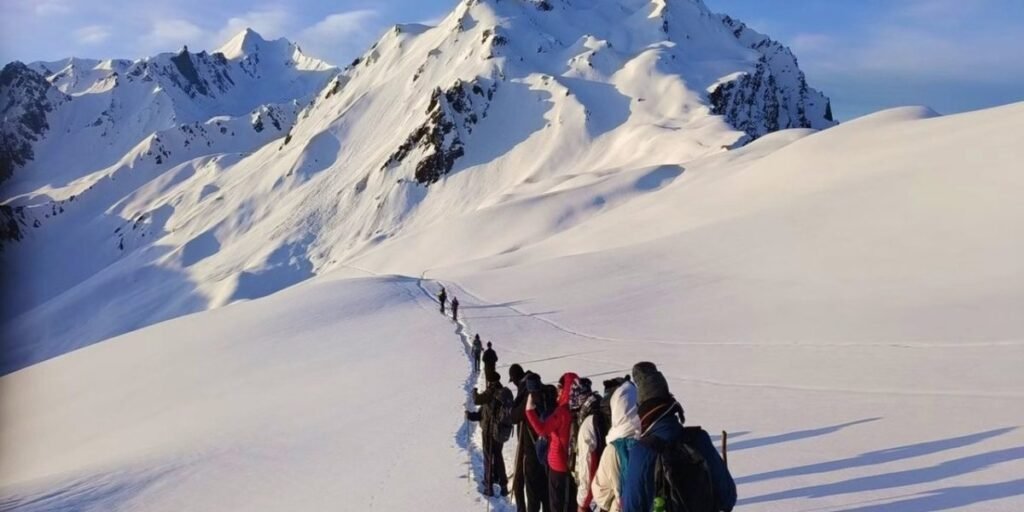
👉 Summer is 100% the best time for the combination trek.
🍁 2️⃣ Post-monsoon (September – mid-October) – Clear trails and spectacular views.
If you want crystal-clear mountain views, calm weather, and freedom from snow-related challenges, September – mid-October is the best time.
- After the monsoon, the mountains look clean and fresh. Benefits of this season:
- Excellent visibility – great for photography
- Cool days, cool nights
- Steady weather with fewer crowds
- Forests turn golden-brown
- Excellent conditions for extended camping in the Himalayan wilderness
Temperature (September–October):
- Daytime: 8°C to 18°C
- Nighttime: -2°C to 5°C
Trail conditions:
- No snow on the Har Ki Dun slopes
- Light snow on the Sar Pass until October
- Less slippery
- Very calm trekking conditions
👉 Second best time after summer.
🌧️ 3️⃣ Monsoon (July–August) – Not recommended
The monsoon brings heavy rain to Uttarakhand and Himachal Pradesh. The Har Ki Dun Valley becomes slippery, and the Sar Pass area becomes very dangerous due to fog, heavy rain, and landslides.
Why should you avoid the monsoon?
- High risk of landslides
- Low visibility
- Slippery paths
- Leeches in forested areas
- Sudden changes in weather
👉 Monsoon = Avoid for safety reasons.
❄️ 4️⃣ Winter (November – March) — Sar Pass closed, only Har Ki Dun accessible
In winter, Sar Pass (4,160 m) accumulates heavy snow, officially closing the route. Har Ki Dun remains open for trekking in winter, but the combined route cannot be completed.
Why is the combined route not possible?
- Sar Pass is covered in deep snow.
- High risk of avalanches.
- The routes are difficult to access.
- Winter brings very severe storms.
- At night, the temperature at Sar Pass drops to -15°C…-20°C. 👉 Winter = Not suitable for combined hikes.
📅 Monthly Breakdown Best Time for the Har Ki Dun (Extended Guide)
January – February
- ❌ Sir Pass closed, heavy snow
- ✔ Winter treks to Har Ki Dun are only possible
March
- ❌ Sir Pass still closed
- ✔ Heavy snow on the route to Har Ki Dun
April
- ✔ Start of trekking season
- ✔ Snow melts, route opens
- ✔ Attractive for snow lovers
May – June
- 🌟 Peak season
- ✔ Best weather
- ✔ Ideal for the Har Ki Dun + Sir Pass combination
July – August
- ❌ Monsoon
- ❌ Not recommended for trekking
September
- ✔ Clear skies
- ✔ Perfect visibility
- ✔ Best time after summer
October
- ✔ Excellent weather until mid-October
- ❄ Light snowfall begins at the end of Sir Pass
November – December
- ❌ Sar Pass is closed
- ✔ Only winter treks to Har Ki Dun are possible.
🗺️ Why is timing so important for this Best Time for the Har Ki Dun trek?
- Choosing the right time ensures:
- Increased safety on the trail
- Good visibility for navigation
- Comfortable temperature in the tent
- No snow-covered paths
- Reduced risk of storms
- Consistent trekking rhythm
- Better health + acclimatization
- Good weather can make your trek memorable, while bad weather can be risky.
⭐ Quick Summary Table: Best Time for the Har Ki Dun – Sar Pass Combined Trek
| April – June | ⭐ Best | Snow patches, stable weather, open trails |
| September – Mid October | ⭐ Excellent | Clear skies, best visibility, less crowd |
| July – August | ❌ Avoid | Monsoon, landslides, slippery |
| November – March | ❌ Not Possible | Sar Pass closed due to heavy snow |